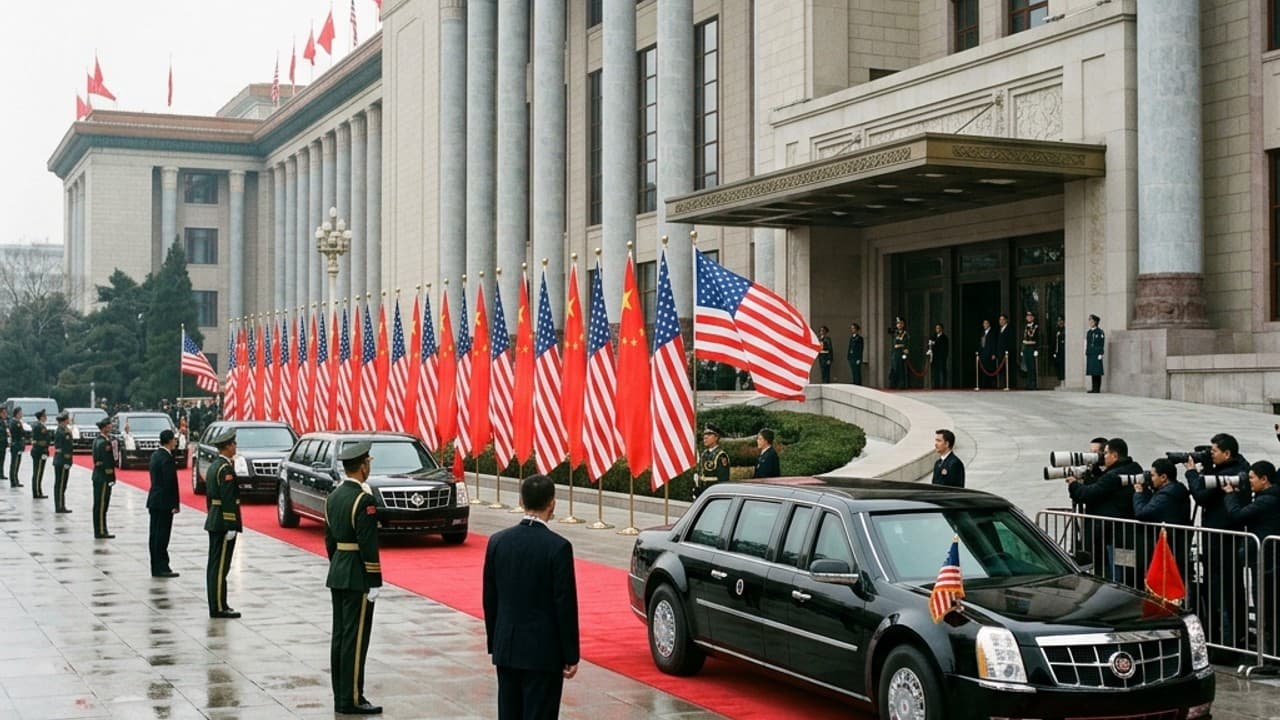
Trump Travels to Beijing for High-Stakes Talks With Xi Jinping
United States President Donald Trump is travelling to Beijing for a summit with Chinese President Xi Jinping in what represents the most consequential bilateral engagement between the world's two largest economies in years. The talks are expected to cover a sweeping agenda including trade dispute resolution, Taiwan's political status, and a range of technology and security flashpoints that have pushed US-China relations to a breaking point.
The summit comes at a moment of acute strategic tension. Washington and Beijing remain locked in a tariff war that has disrupted global supply chains, while Taiwan Strait incidents have raised the spectre of direct military confrontation. Trump's decision to travel to Beijing rather than insist on a neutral venue is itself being interpreted as a significant diplomatic signal.
American officials have offered cautious optimism ahead of the talks, while emphasising that no outcome is guaranteed. The administration faces pressure from hawkish domestic constituencies that view any concession to Beijing — on trade, technology exports, or Taiwan — as a strategic capitulation at a moment when Chinese military capacity continues to expand.
Analysts warn that the stakes extend well beyond the bilateral relationship. The trajectory of US-China talks will directly influence global market stability, the security architecture of the Indo-Pacific, and the political calculations of allies and adversaries from Seoul to Islamabad. A substantive breakthrough could ease months of financial market volatility; a failure risks accelerating the decoupling of the world's two dominant economies.
Similar Stories
Background and related coverage on this story.
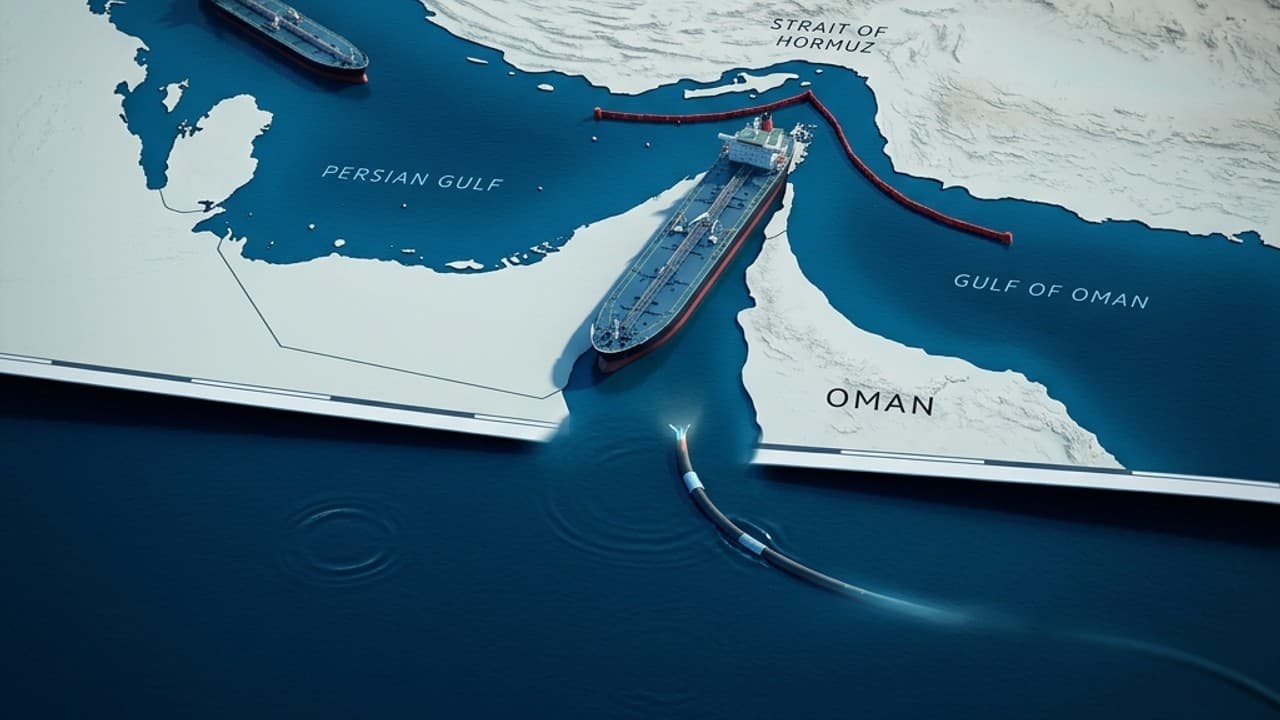
Iran halts US messaging, threatens Strait of Hormuz closure
Iran has announced it is halting message exchanges with the United States and has threatened to block the Strait of Hormuz, according to a news agency report. The move represents a significant escalation in tensions between Tehran and Washington at a moment when diplomatic channels between the two countries had been under careful management.
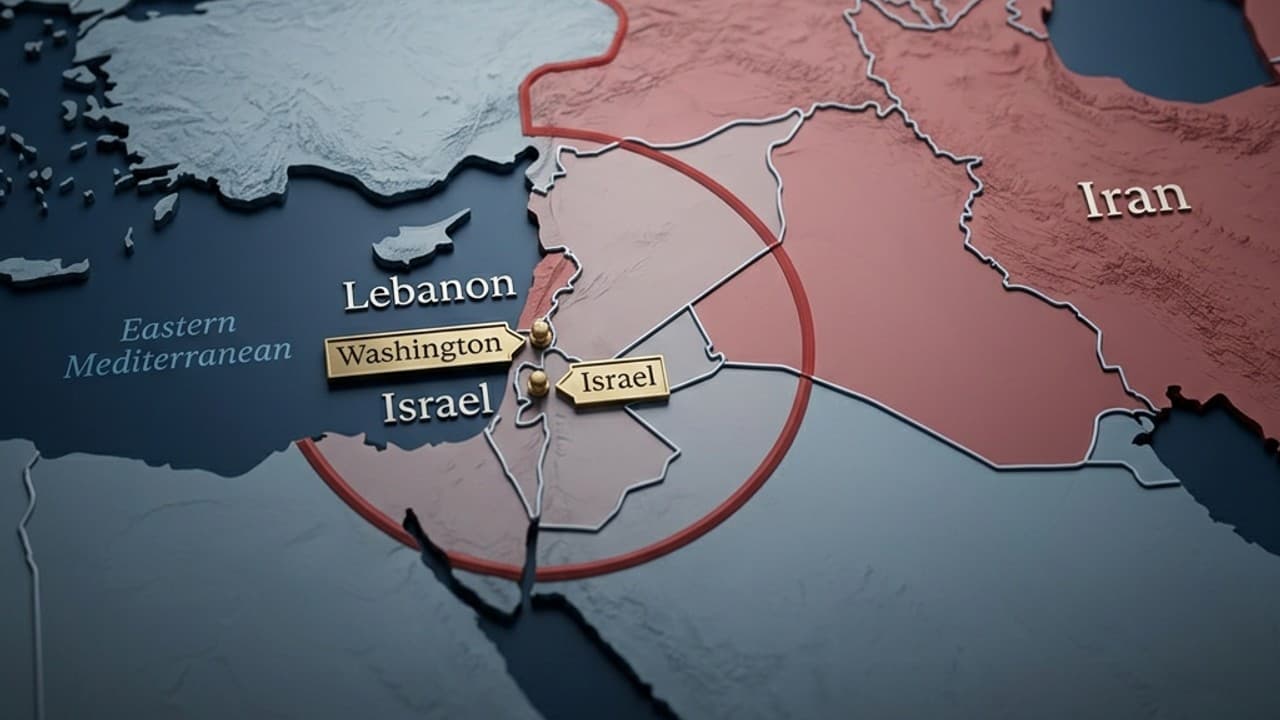
Iran Says US Ceasefire Agreement Covers Lebanon, Holds Washington Accountable
Iran has stated that its ceasefire agreement with the United States explicitly includes Lebanon, and has placed responsibility for any violations squarely on Washington and Israel. The declaration significantly broadens the scope of the ceasefire framework and introduces a direct accountability mechanism that Tehran is asserting as a binding diplomatic position.

Trump Warns US Will Destroy Iran Militarily If Nuclear Deal Collapses
United States President Donald Trump on Sunday revealed a key concession being offered to Iran in ongoing nuclear negotiations while simultaneously issuing a stark warning that the United States would 'finish it off militarily' if a diplomatic agreement fails to materialise. The statement represents one of the most direct articulations of Washington's military threat posture toward Tehran in the current negotiating round.
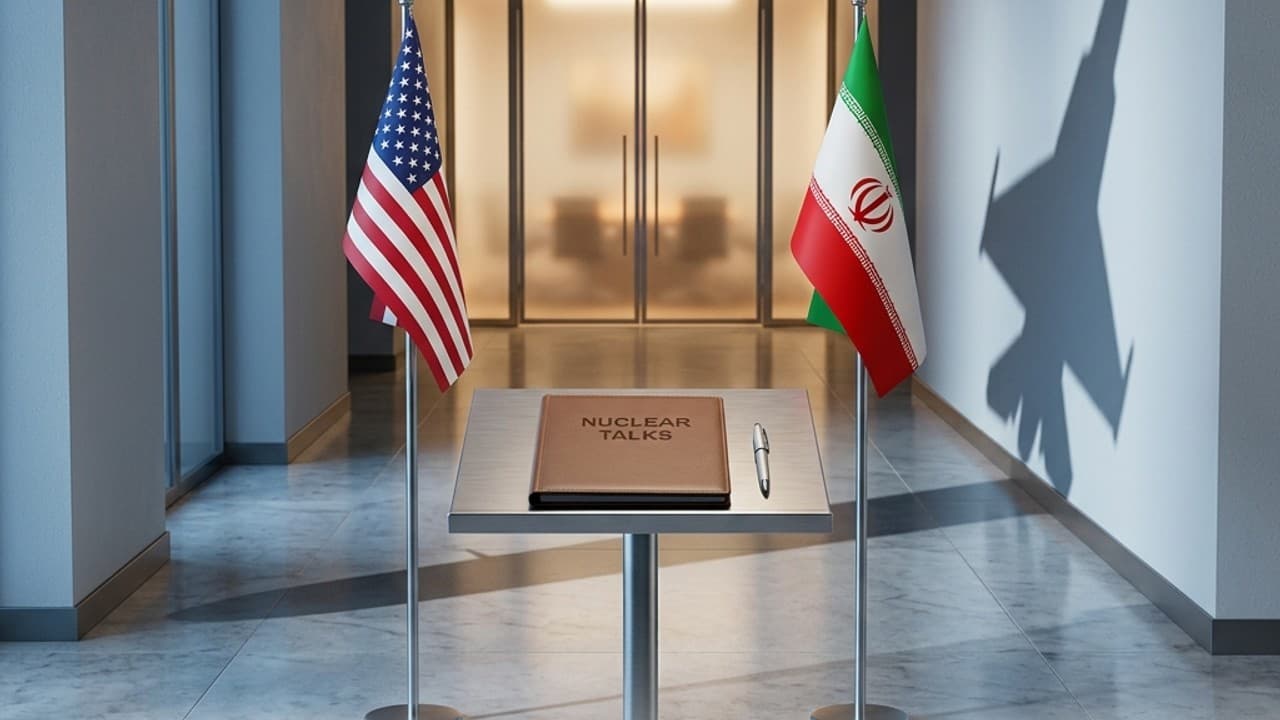
US Warns War Remains Option Despite Productive Iran Nuclear Talks
The United States has characterised ongoing nuclear negotiations with Iran as productive while simultaneously refusing to rule out military action, sustaining the dual-track pressure strategy that has defined Washington's posture throughout the diplomatic process. Senior US officials conveyed the warning as both governments continue to evaluate the terms of a potential agreement, underscoring that progress at the table has not diminished the military option as a tool of coercion.

Trump Says Iran Deal Decision Imminent, Demands Hormuz Strait Opening
US President Donald Trump declared on Friday that a decision on a potential deal with Iran is imminent, and issued a direct demand that the Strait of Hormuz must remain open, raising the stakes in an already volatile standoff with significant consequences for global energy markets. Trump's statement represents one of the sharpest public ultimatums issued by Washington in the current Iran nuclear negotiating cycle.
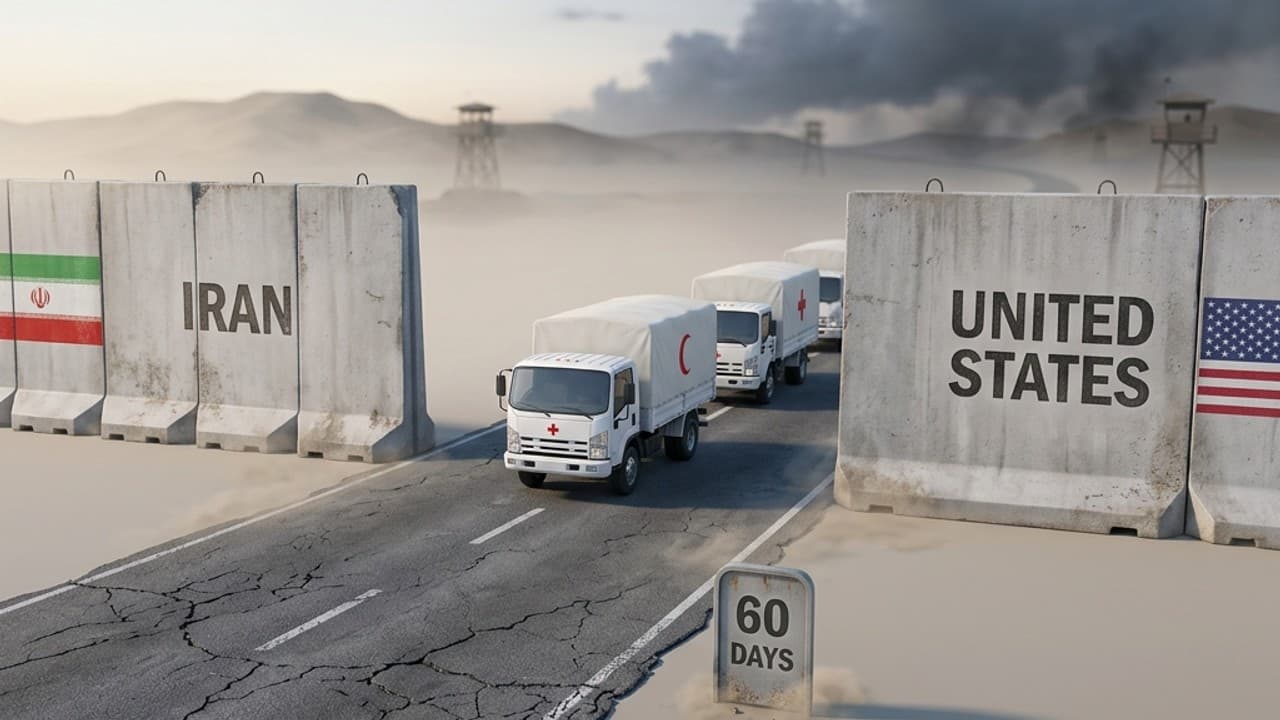
Iran and US Agree Plan for 60-Day Ceasefire Extension
Iran and the United States have reached a tentative agreement on a framework to extend the existing ceasefire by 60 days following the latest wave of military attacks, diplomatic sources confirmed. The agreement marks a significant, if fragile, step in de-escalating one of the most volatile confrontations in the Middle East in recent years.